The Personal Uniform: Why the Same Outfit Daily Is Peak Style Confidence
Quick Answer: A personal uniform — one refined silhouette, worn daily in slight variations — saves decision energy, reads as confident self-knowledge, and becomes more memorable than a wardrobe of constant novelty. Lock a silhouette, buy multiples, vary by texture and accessory.
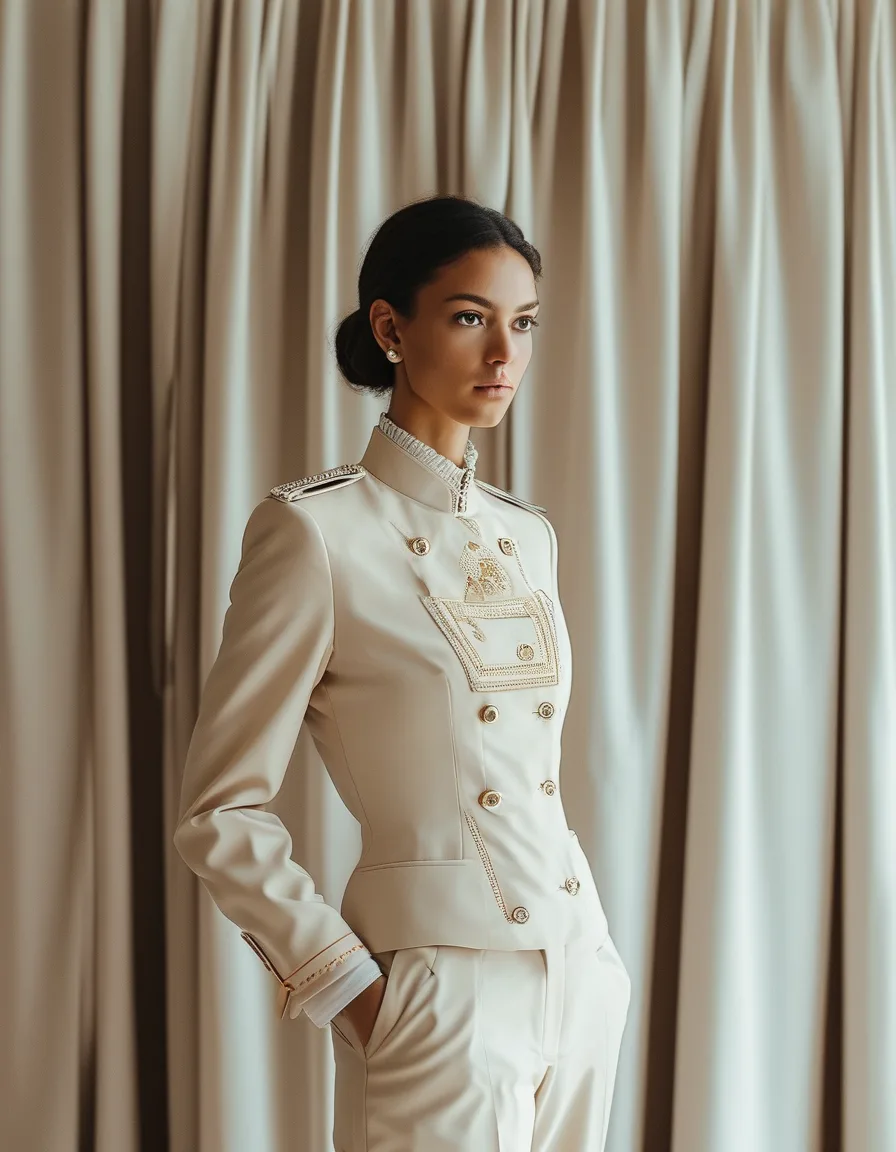
Fashion’s quiet power move is repetition: the personal uniform — the same silhouette, refined and repeated daily — worn by creative directors and design icons precisely because it reads as total self-knowledge. Here’s the economics behind it, how to assemble your own, and the art of variation inside the constraint.

Why do so many stylish people wear basically the same outfit every day?
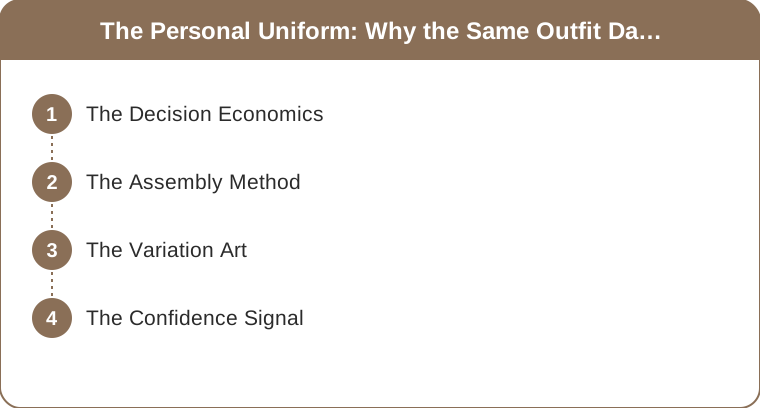
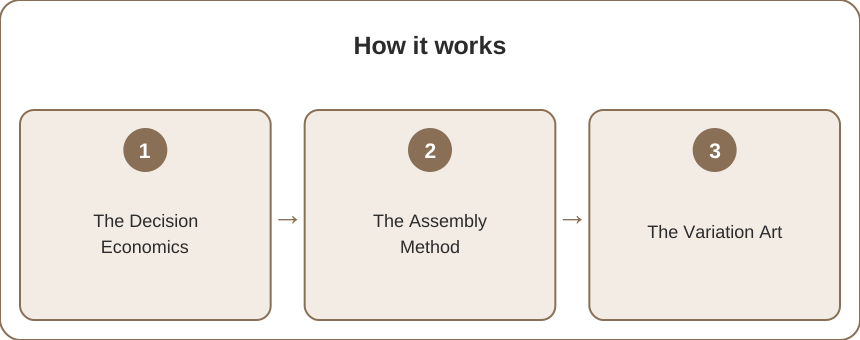
It comes down to decision economics. Outfit decisions spend morning cognition — the same decision-fatigue research that made tech founders famous for their identical grey tees. A uniform refunds that cognitive cost daily, and the compound interest funds everything else you have to think about that morning. Style-as-system beats style-as-daily-quiz for a large personality type; the uniform is simply that type’s formal wear.
How do you actually build a personal uniform?
Four steps. First, an evidence review: look back at the outfit you reached for on your important days — that’s your signature crystallizing in real time. Second, a silhouette lock: pick one combination (wide-trouser-and-fine-knit, dress-and-sneaker, denim-and-blazer) and commit. Third, the multiples purchase: buy the pieces you love in duplicate and triplicate — the uniform’s genuinely radical act. Fourth, palette discipline, so every combination inside your closet is pre-approved and nothing clashes by accident.

Doesn’t wearing the same thing every day get boring?
Not if you vary inside the constraint rather than avoiding it. Rotate texture within the same silhouette — the same-shape knit in different weaves changes the whole feel without changing the formula. Let accessories be your daily variable — scarves, earrings, and lip color handle the novelty your outfit doesn’t need to. And translate seasonally: the uniform has a summer dialect and a winter one. The uniform is a format, not a photocopy — it’s jazz within the changes, not silence.
Does a uniform actually make you look more stylish, or just simpler?
More stylish, and the social physics back it up. Repetition reads as intention — the same-outfit woman is read as knowing exactly who she is, the logical conclusion of the whole re-wear movement. The signature becomes memorable — the icon effect, where the uniform is the brand. And wearers consistently report the same paradox: less variety, more compliments. Peak style was never maximal choice; it was a decision made once, excellently.
Myth vs. Fact: The Personal Uniform
Myth: Wearing the same outfit repeatedly means you’ve given up on style. Fact: It’s the opposite — it’s a deliberate style decision, made once, that outperforms daily reinvention.
Myth: A uniform has to be identical every single day to work. Fact: Texture, accessories, and seasonal fabric swaps give a locked silhouette real variation without breaking the formula.
Myth: Only minimalists or tech founders can pull off a uniform. Fact: Any silhouette can become a uniform — the dress-and-sneaker combination works exactly the same way as the grey-tee formula.
What Nobody Tells You About Building a Uniform
Nobody tells you that the hardest part isn’t finding the silhouette — it’s committing to the multiples purchase before you’re fully sure. Buying two or three of a piece you’ve only worn once feels risky, but it’s exactly the radical act that makes the system work; testing a single piece for a few weeks first, then doubling down, solves that hesitation without abandoning the format. Nobody mentions either that a uniform can evolve over years — the silhouette you lock at 25 doesn’t have to be the one you’re still wearing at 40; the economics and the confidence-signal stay the same even as the specific formula updates.
FAQ
How many pieces do you need to build a personal uniform?
Often surprisingly few — one locked silhouette in two or three color variations, plus a handful of texture and accessory options, is enough to cover a full week without repeating the exact same look.
Does a uniform work for more dressed-up or formal settings too?
Yes — the same logic applies to a signature dress-and-blazer combination for work events as it does to a casual denim-and-tee formula; the constraint is the point, not the formality level.
What’s the first step to finding your own uniform?
Look back at what you actually reached for on your best, most confident days recently — that outfit, not a new purchase, is usually the real starting signature.
What if you get bored of your uniform after a year?
Update the palette or texture rather than abandoning the format entirely — the system (locked silhouette, planned variation) is what saves decision energy, not any one specific fabric or color choice.
TL;DR:
- A uniform refunds daily decision energy for bigger priorities
- Lock one silhouette, buy pieces you love in multiples
- Vary through texture, accessories, and seasonal fabric — not through starting over
- Repetition reads as confidence and becomes genuinely memorable
Lock the silhouette, buy the multiples, vary by texture and accessory. The uniform was never giving up on style — it was style, concluded: one great answer, worn daily, with the mornings refunded.
Keep Reading
This article is for general styling and informational purposes only. Trends, sizing, availability and pricing may vary by brand and season.