Why Leaving Negative Space in a Minimalist Outfit Only Works If One Anchor Point Holds the Eye
Negative space, the deliberate absence of pattern or detail across most of an outfit, is a defining tool of minimalist dressing, and simply removing detail everywhere doesn’t automatically produce that polished, intentional look on its own — it reads as genuinely empty rather than restrained unless the eye has at least one clear point to land on first.

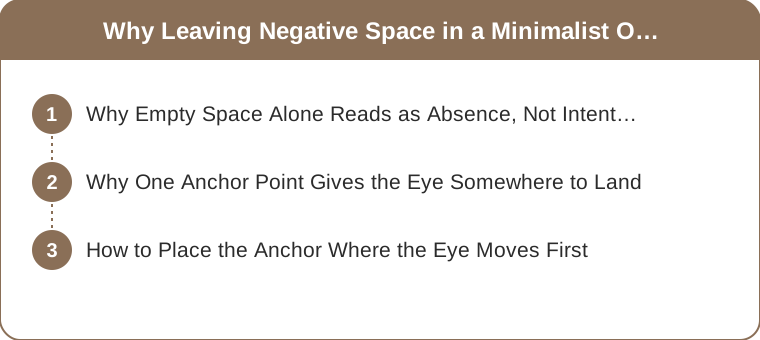
Why Empty Space Alone Reads as Absence, Not Intention
The gap: an-outfit-with-negative-space-across-every-single-area-and-no-clear-focal-point-anywhere-reads-to-the-eye-as-simply-unfinished-or-forgotten-rather-than-deliberately-restrained (an outfit with negative space stretched across every single area, and no clear focal point placed anywhere within it, reading to the eye as simply unfinished or overlooked, rather than as a deliberately restrained styling choice, per the minimalist-not-boring-guide logic — an-outfit-with-negative-space-stretched-across-every-single-area-and-no-clear-focal-point-anywhere-reading-to-the-eye-as-simply-unfinished-or-overlooked-rather-than-deliberately-restrained), and the reframe (restraint requiring at least one point of contrast to be legible as restraint at all)).

Why One Anchor Point Gives the Eye Somewhere to Land
The anchor: placing-one-single-anchor-a-bold-accessory-a-strong-silhouette-line-or-a-single-textured-piece-gives-the-eye-a-clear-place-to-land-before-registering-the-rest-of-the-outfit-as-deliberate-space (placing just one single anchor point, whether a bold accessory, a strong silhouette line, or one genuinely textured piece, gives the eye a clear place to land first, before it goes on to register the rest of the outfit as deliberate negative space rather than an oversight, per the art-of-negative-space-outfits logic — placing-just-one-single-anchor-point-whether-a-bold-accessory-a-strong-silhouette-line-or-one-genuinely-textured-piece-gives-the-eye-a-clear-place-to-land-first-before-registering-the-rest-of-the-outfit-as-deliberate-negative-space), and the frame (one anchor doing the work of making an entire outfit’s restraint readable)).
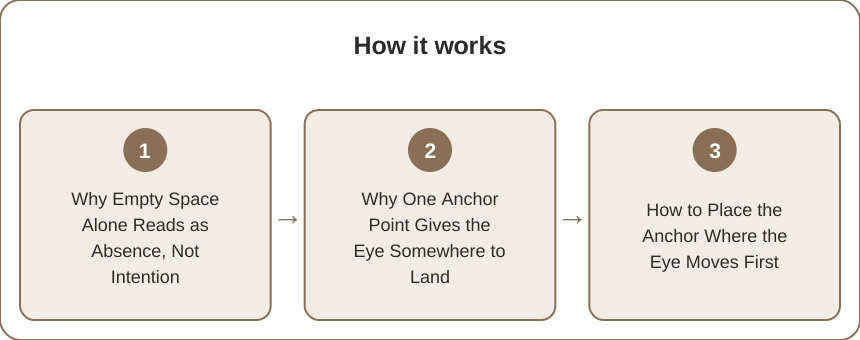
How to Place the Anchor Where the Eye Moves First
The placement: position-the-single-anchor-piece-at-the-point-the-eye-naturally-travels-to-first-typically-the-neckline-or-hemline-rather-than-burying-it-somewhere-the-eye-rarely-reaches (positioning that single anchor piece specifically at the point the eye naturally travels to first when scanning an outfit, typically the neckline or the hemline, rather than burying it somewhere on the body the eye rarely actually reaches, per the sculptural-minimalism logic — positioning-that-single-anchor-piece-specifically-at-the-point-the-eye-naturally-travels-to-first-when-scanning-an-outfit-typically-the-neckline-or-the-hemline-rather-than-burying-it-somewhere-the-eye-rarely-reaches), and the frame (placement mattering as much as the anchor’s existence for the whole outfit to register correctly).
Negative space stretched across every area of an outfit with no clear focal point reads to the eye as simply unfinished rather than deliberately restrained, which is why one single anchor point — a bold accessory, a strong silhouette line — matters so much, giving the eye somewhere to land first. Positioning that anchor at the point the eye naturally travels to first, typically the neckline or hemline, makes the placement do as much work as the anchor itself in getting the whole outfit to read as intentional.
Keep Reading
This article is for general styling and informational purposes only. Trends, sizing, availability and pricing may vary by brand and season.