Minimalist Muse

Minimalist style & the forever wardrobe

The Art of Negative Space in Minimalist Outfits

2026-07-13

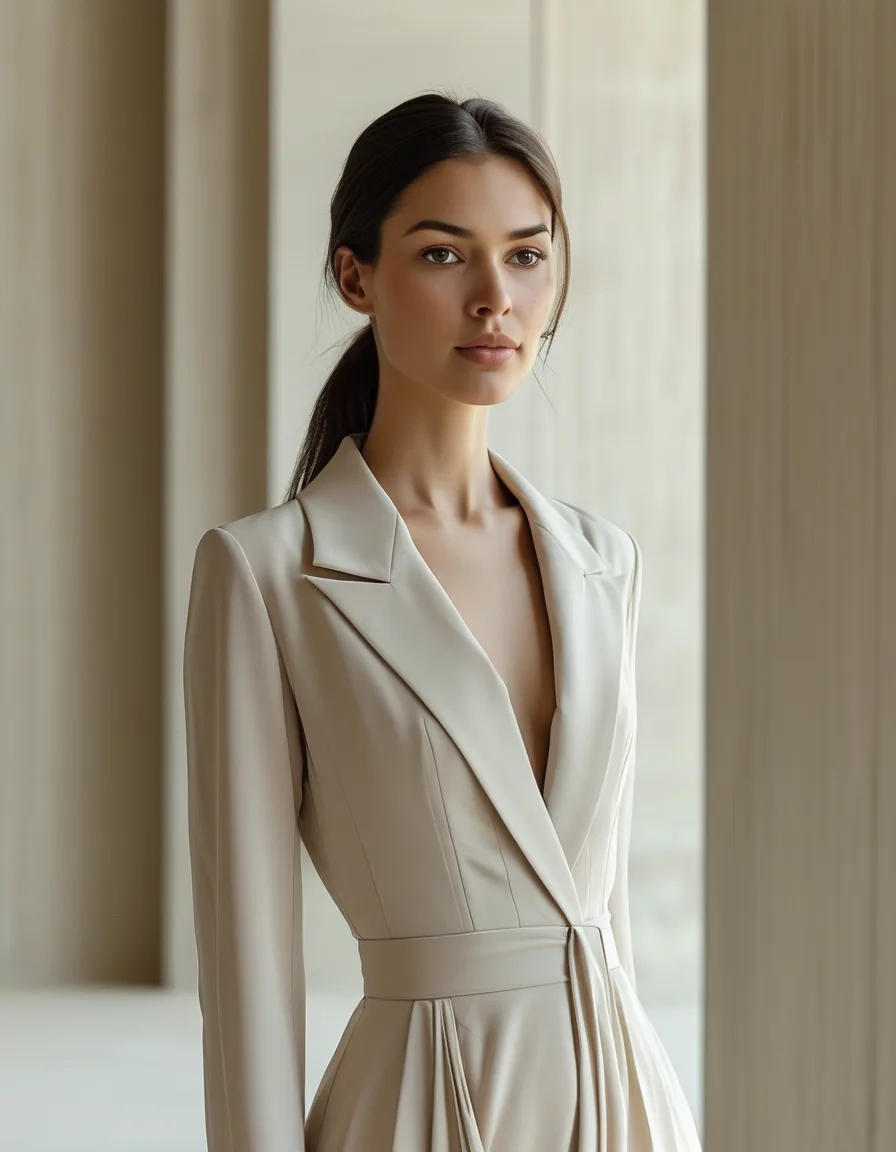
Designers talk about negative space constantly — the empty parts of a poster that make the type land. Almost nobody applies it to getting dressed, which is strange, because an outfit is a composition too, and the empty parts are doing exactly the same job.

Quick Answer: Negative space in an outfit is the deliberate emptiness — bare skin, uninterrupted fabric, an unadorned neckline — that gives one element room to be seen. It works the same way white space works in design: by removing competition. In practice it means clean silhouettes, one focal point, no filler accessories, and fabric quality good enough to survive the scrutiny that comes with nothing to hide behind.

The Art of Negative Space in Minimalist Outfits

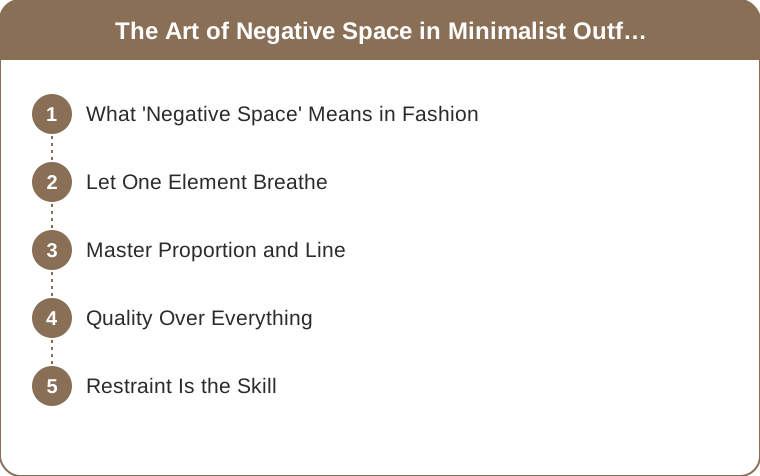
At a glance

What Does Negative Space Actually Mean in an Outfit?

It’s every part of the look where nothing is happening — and it’s not accidental.

In a poster, negative space is the blank paper around the headline. In an outfit, it’s:

  • Bare skin — an unadorned neckline, a wrist without a bracelet, an ankle between hem and shoe
  • Uninterrupted fabric — a long stretch of a single color with no seams, prints, or hardware breaking it
  • Empty structural areas — a plain shoulder, a clean back, an untouched waist

The key word is deliberate. A bare neck reads as a choice when the rest of the outfit is composed. The same bare neck reads as forgetting when the outfit is otherwise busy.

The test: ask what the outfit’s one focal point is. If you can name it instantly, the negative space is doing its job. If you can’t, there’s too much happening for any of it to land.

How Do You Give One Element Room to Breathe?

Choose the element first, then remove everything that competes with it.

A sculptural sleeve, a dramatic neckline, a single architectural earring — each needs surrounding emptiness to be seen at all. Put a statement sleeve next to a statement necklace and neither one registers; they just cancel out into “busy.”

Practical placement rules:

  • A statement neckline means no necklace, and ideally hair off the face or fully down — not competing
  • A sculptural sleeve means a plain bodice, no bracelet on that arm, a simple bottom
  • An architectural shoe means a plain hem, no ankle detail, nothing at the leg
  • A dramatic earring means a high plain neckline or a fully bare one, and hair pulled back

Notice that every rule is about what to remove. That’s the whole discipline.

The Art of Negative Space in Minimalist Outfits

Why Does Proportion Carry So Much Weight Here?

Because when you strip out detail, silhouette is all that’s left. There’s no print to distract from a shape that isn’t working.

This is where minimalism gets genuinely sophisticated, and it’s also where it gets difficult. A few reliable relationships:

  • Volume above, slim below — an oversized shirt with narrow trousers
  • Slim above, volume below — a fitted knit with a wide-leg trouser or full skirt
  • Column — same width top to bottom, in one tonal family. The hardest to execute and the most striking
  • The break point — wherever the outfit changes width, that’s your visual anchor. Put it at your natural waist or well away from it, never slightly off

Get the shape right and you genuinely need nothing else. Get it wrong and no accessory will rescue it, which is the uncomfortable part of dressing this way.

Myth vs Fact

Myth: Negative space means wearing less clothing. Fact: It means less interruption. A floor-length long-sleeved dress in one color has enormous negative space. A cropped top with three necklaces has almost none.

Myth: Minimalist outfits are safer than maximalist ones. Fact: They’re riskier. There’s nowhere to hide a poor fit, a cheap fabric, or a bad proportion — every flaw sits in plain view against the emptiness.

Myth: An empty outfit needs an accessory to “finish” it. Fact: The urge to add one more thing is the exact impulse this approach is designed to resist. Often the finished version is the one you were about to add to.

Myth: This only works on tall, slim frames. Fact: It works on any frame, because it’s about proportion relationships rather than absolute dimensions. The break point moves; the principle doesn’t.

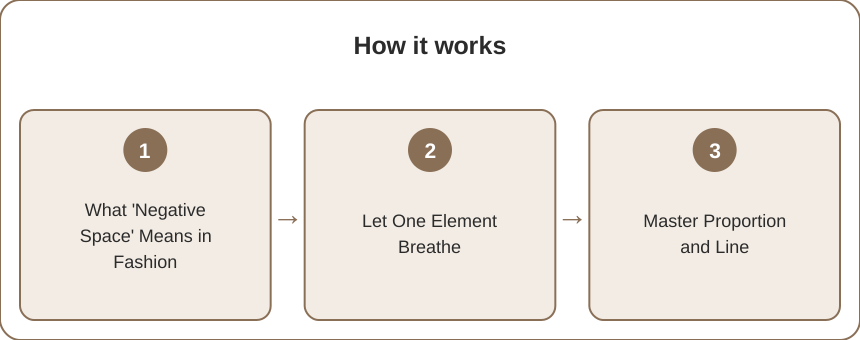
How it works

Why Does Quality Matter More in a Minimal Outfit?

Because negative space is a magnifying glass pointed at everything you left in.

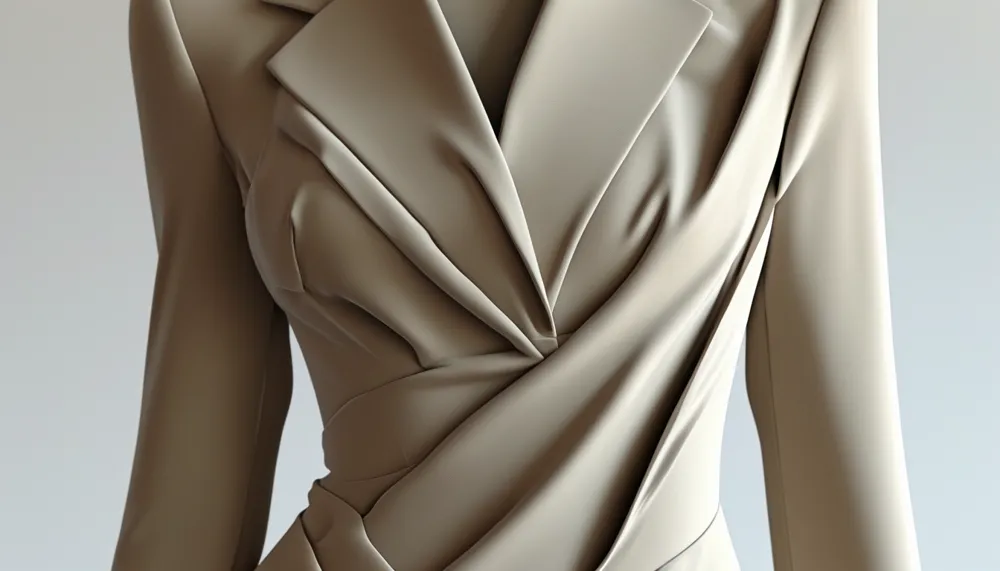
With no pattern to break up the surface, the eye reads the fabric directly: how it hangs, how it catches light, whether the seams pull. A slightly cheap poplin looks fine under a printed blazer and looks obviously cheap on its own.

What to check when there’s nowhere to hide:

  • Drape — does it fall from the shoulder, or sit stiffly? Hold it up and let go
  • Opacity — thin fabric in a plain color shows every underlying line
  • Seam finish — puckering along a side seam is invisible in a print and glaring in a solid
  • Shoulder fit — the one measurement a tailor can’t easily fix, and the one negative space exposes first

This is the practical argument for buying fewer, better pieces. A capsule wardrobe built this way is less about ownership philosophy and more about the fact that this style of dressing simply doesn’t tolerate mediocre construction.

FAQ

How do I know when an outfit has enough negative space?

Name the focal point out loud. If it takes more than a second, or if you name two things, remove something. The version you almost added to is usually the finished one.

Doesn’t this get boring to wear every day?

Not if you vary proportion and texture rather than adding decoration. The same three colors in different silhouettes and different fabric hands produce genuinely distinct outfits, which is the whole skill.

Can I use negative space with color?

Absolutely — negative space is about emptiness, not about neutrality. A saturated red dress with no accessories has plenty of it. The color is the focal point; the emptiness is what lets it be one.

TL;DR:

  • Negative space is the deliberate emptiness that makes one element readable
  • Choose the focal point first, then remove everything competing with it
  • Silhouette carries the whole look when detail is gone — proportion is the real skill
  • Minimal dressing is harder, not safer; every flaw sits in plain view
  • Check drape, opacity, seam finish, and shoulder fit before buying
  • The hardest skill is stopping — the urge to add one more thing is the thing to resist

Minimalism is a masterclass in restraint. Let one element breathe, obsess over proportion and quality, and resist the last addition — the elegance genuinely does live in what you leave out.

Keep Reading

This article is for general styling and informational purposes only. Trends, sizing, availability and pricing may vary by brand and season.

minimalismnegative spaceelegant style

← All articles