Minimalist Muse

Minimalist style & the forever wardrobe

Sculptural Minimalism: When Simple Gets Interesting

2026-07-12

Quick Answer: Sculptural minimalism is minimalism where the interest lives in the shape instead of the print. You keep a tight neutral palette — black, cream, stone, taupe — and let one architectural piece per outfit carry the drama. Discipline in color, boldness in form. That’s the whole recipe.

Say “minimalist wardrobe” out loud and watch what people picture: a beige void, three sad t-shirts, a closet that forgot to have a personality. Fair. Plenty of minimalism really is that dull.

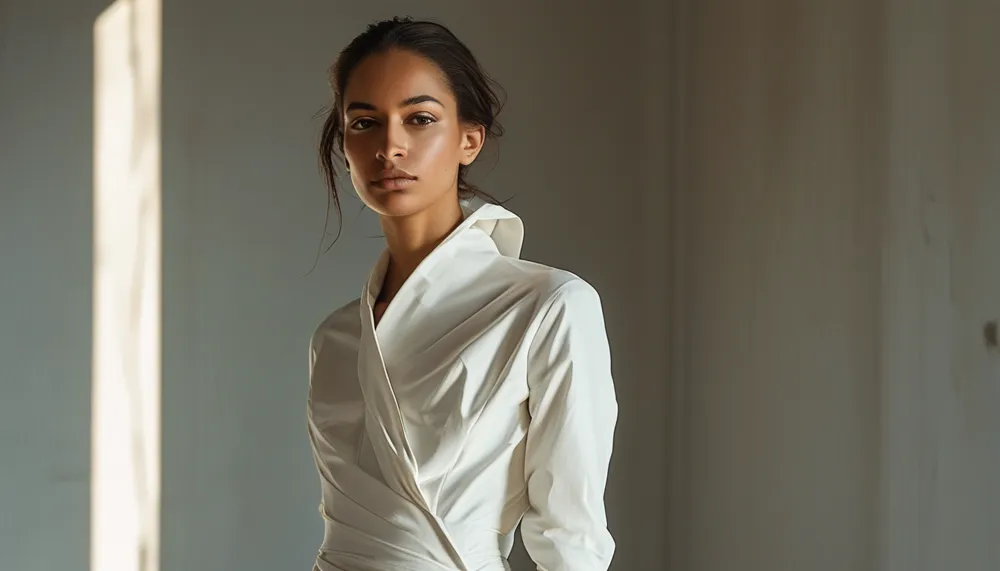
But the most compelling minimalists you’ll ever stand next to aren’t wearing boring clothes. They’re wearing pieces that are quiet in color and loud in shape — a collar that stands like architecture, a hem that cuts on a diagonal, a sleeve that holds its own volume.

That’s sculptural minimalism. The drama just moved from the surface to the silhouette.

Sculptural Minimalism: When Simple Gets Interesting

At a glance

What Is Sculptural Minimalism, Exactly?

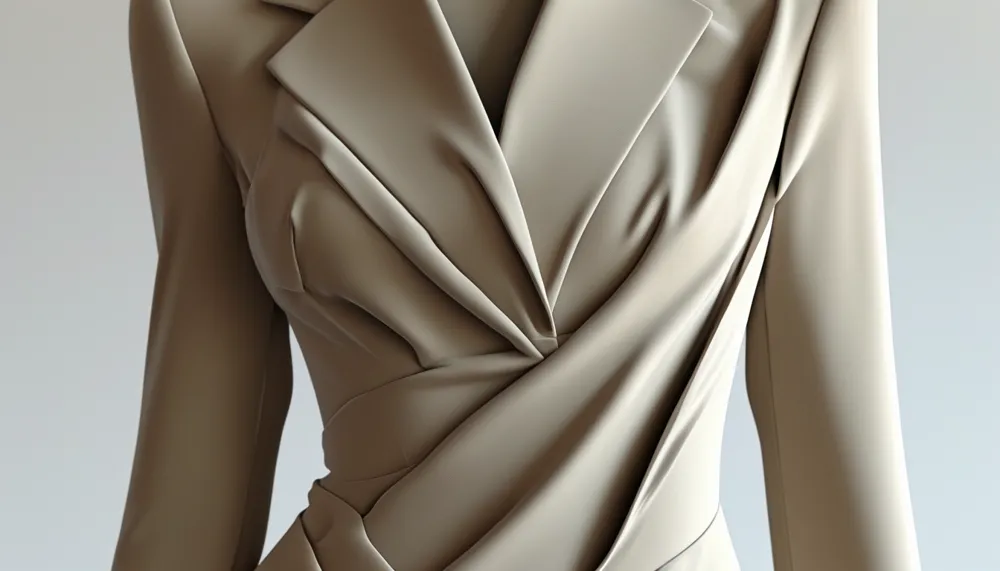
Sculptural minimalism swaps prints, logos, and embellishment for one thing: interesting form. An asymmetric hemline. A dramatically draped neckline. A cocoon coat that curves away from the body instead of following it.

The detail lives entirely in the cut, which is exactly why a head-to-toe cream outfit can still be the most striking thing in a room of printed dresses. Nothing shouts. Everything is considered.

Think of it as the difference between a painted vase and a hand-thrown one. Same neutral glaze; completely different amount of interest.

How Do You Build a Sculptural Wardrobe Without Buying Everything?

Start with the rule that keeps it affordable: one shaped piece per outfit, everything else plain. That means you need far fewer sculptural items than you’d think — roughly 4 or 5 will carry an entire season, because each one gets rebuilt around different basics.

Hunt for pieces with intentional structure:

  • A coat with a defined shoulder or a curved, cocooning back
  • Trousers with an unusual drape — wide, fluid, or gently tapered at the ankle
  • A top folded like origami, or a shirt with a stand collar
  • One architectural accessory: a single earring, a hard-edged bag

In a neutral palette these read as quietly artistic. They cost more thought to find than a printed blouse, but they do all the styling work for you afterward — which is the trade you actually want.

Styling flat lay

Why Does the Palette Have to Stay So Tight?

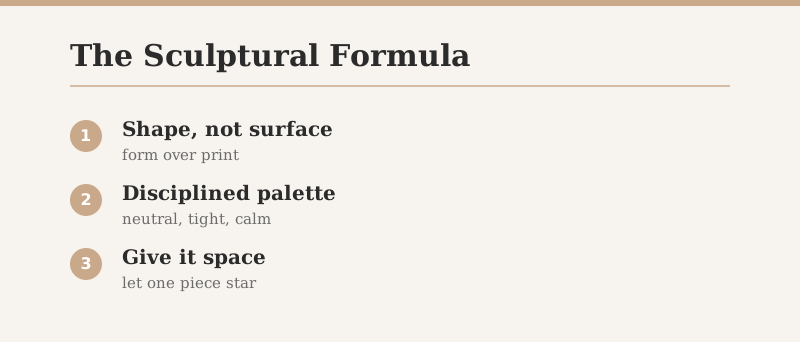
Here’s where restraint earns its keep. The magic depends on a disciplined neutral range — black, cream, stone, taupe, maybe one deep ink or olive — so the shapes have room to breathe.

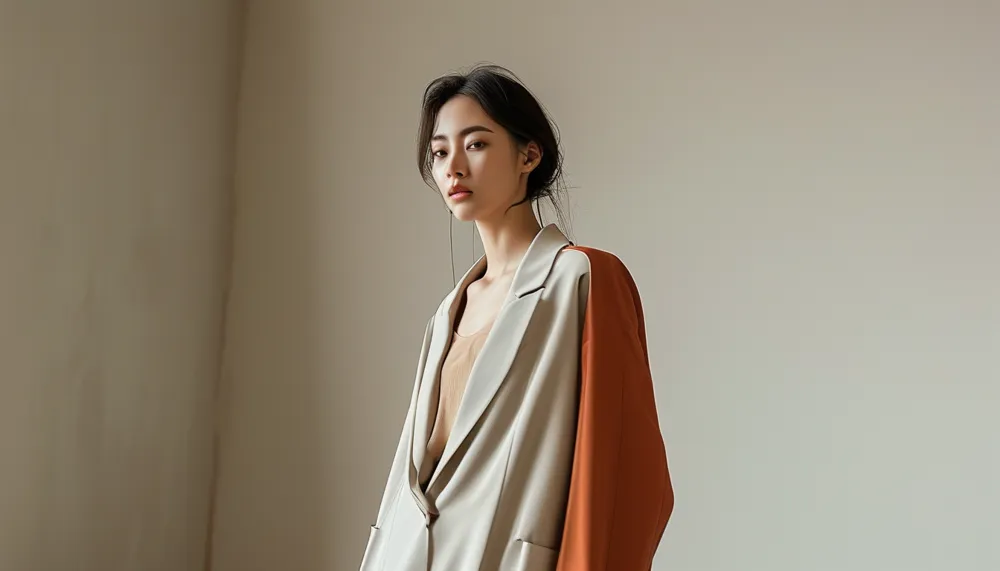
Add bold color and bold shape and they compete. The eye can’t decide what to look at, and the whole effect collapses into “interesting outfit, not sure why.” Two loud elements cancel each other; one loud element reads as intentional.

A useful working limit: no more than three tones in a sculptural outfit, and keep them within two steps of each other on the value scale. Cream with stone with taupe, yes. Cream with cobalt with black, not here.

Deeper dive

How Do You Style One Strong Shape?

When a piece has a genuinely strong silhouette, treat it like a sculpture in a gallery: give it space.

  1. Pair volume with a straight line. Sculptural top, plain straight trousers. Voluminous skirt, close-fitting knit.
  2. Let a strong dress stand alone. No belt, no layered jacket, no competing texture.
  3. Cap the accessories at one. A single sculptural earring is plenty. Resist styling it into oblivion.
  4. Keep shoes quiet. A clean loafer or plain boot; the shoe is not the moment today.

The piece is the moment. Let it be the moment.

Myth vs Fact

Myth: Minimalism means owning almost nothing. Fact: It means owning things that don’t fight each other. A sculptural wardrobe of 30 well-cut pieces is far more minimalist in effect than 12 mismatched ones.

Myth: Neutral outfits are boring in photos. Fact: Cameras read shape and shadow beautifully. It’s busy prints that photograph as visual noise.

Myth: Architectural clothes only work on tall, thin frames. Fact: Shape works on every frame — you just choose which shape. Volume above with a narrow leg, or narrow above with volume below. Pick one axis and commit.

Myth: You need designer pieces. Fact: A stiff-collared cotton shirt and a well-cut wide trouser from anywhere will read sculptural. Structure comes from cut and fabric weight, not price.

Texture: The Minimalist’s Secret Weapon

Worried a neutral, shape-led outfit will fall flat in person? Texture is the answer.

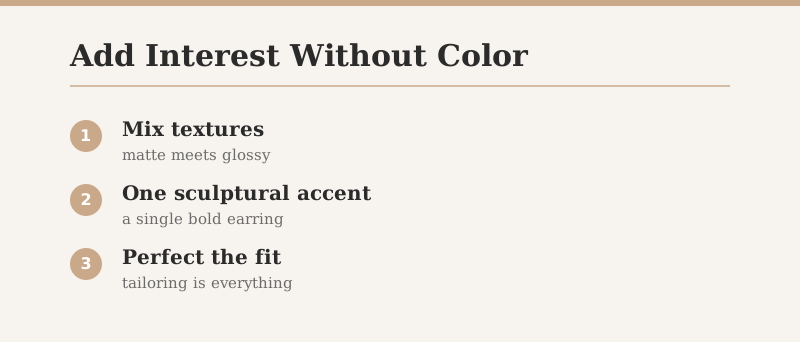
A chunky knit against smooth leather. A matte trouser beside a glossy shoe. Wool meeting silk. Contrast in feel adds richness without adding a single color — it’s the detail people can’t quite name but definitely notice.

If an outfit feels flat, don’t add a print. Add a different surface.

FAQ

How many sculptural pieces do I actually need to start?

Three. One outerwear piece, one top, one bottom. Rebuilt against plain basics, three shaped items generate roughly a dozen distinct outfits before anyone notices repetition.

Can sculptural minimalism work in a hot climate?

Yes, and it’s arguably easier. Linen and heavy cotton hold their own shape well — a boxy linen shirt or a wide-leg cotton trouser is sculptural by default, and both breathe.

What fabrics hold structure best?

Anything with weight or body: wool crepe, heavy cotton poplin, dense linen, ponte, structured denim. Thin drapey jersey collapses against the body and loses the shape you paid for.

Is this the same as “quiet luxury”?

They overlap but aren’t identical. Quiet luxury is about materials and the absence of logos. Sculptural minimalism is specifically about form — you can do it in inexpensive cotton and still nail it.

TL;DR:

  • Sculptural minimalism = neutral palette, interesting shapes, zero decoration
  • One shaped piece per outfit; everything else plain and straight
  • Keep to three tones, close in value — bold color plus bold shape cancels out
  • Give a strong silhouette space: no belt, no layers, one accessory maximum
  • Prioritize fabrics with weight; drapey jersey won’t hold the form
  • Use texture contrast, not print, when an outfit feels flat
  • Three sculptural pieces are enough to start an entire season

Simple never had to mean boring. Shape over decoration, a disciplined palette, and texture doing the quiet heavy lifting — that’s minimalism with an actual point of view.

Keep Reading

This article is for general styling and informational purposes only. Trends, sizing, availability and pricing may vary by brand and season.

← All articles